Cheque Bounce Law in India | Section 138 NI Act Procedure Step by Step
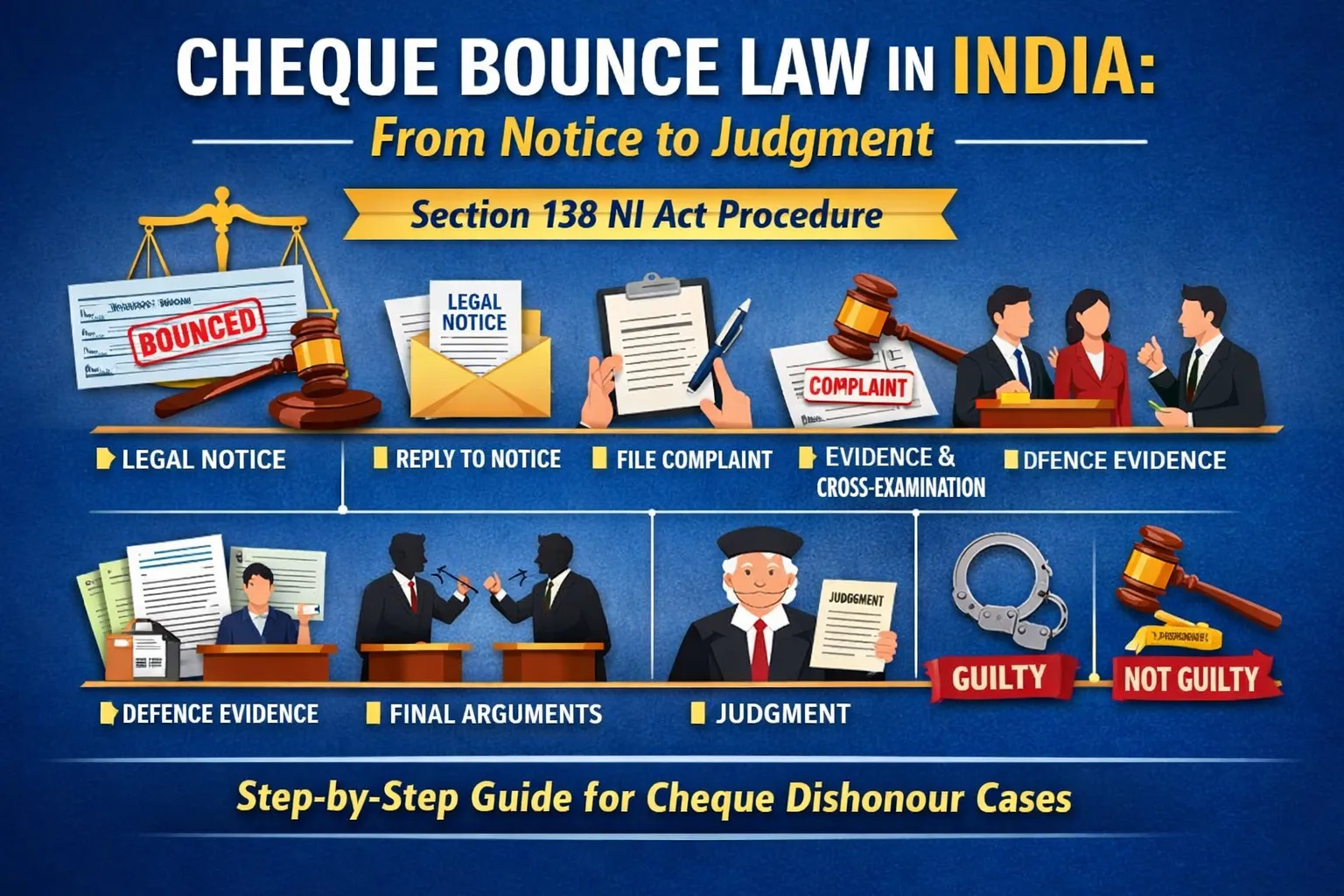
Cheque Bounce Law in India – From Legal Notice to Final Decision
(Complete Guide on Section 138 NI Act Proceedings)
Cheque bounce cases are among the most commonly litigated matters in Indian courts. The law relating to dishonour of cheques is governed primarily by Section 138 of the Negotiable Instruments Act, 1881, which provides a criminal remedy to the payee when a cheque is returned unpaid.
This post explains the entire journey of a cheque bounce case — starting from dishonour of cheque till final judgment by the court.
1. What is a Cheque Bounce Case?
A cheque bounce case arises when:
- A person issues a cheque towards repayment of a legally enforceable debt or liability
- The cheque is presented to the bank within its validity period
- The cheque is returned unpaid due to reasons such as:
- Insufficient funds
- Account closed
- Payment stopped
- Signature mismatch
- Exceeds arrangement
If statutory requirements are fulfilled, the drawer becomes criminally liable.
2. Legal Demand Notice (Mandatory Step)
After cheque dishonour:
- The payee must send a legal demand notice within 30 days from the date of bank return memo
- The notice must demand payment of the cheque amount within 15 days
Contents of a Proper Legal Notice:
- Details of cheque (number, date, amount, bank)
- Reason for dishonour
- Legal liability of drawer
- Clear demand of payment within 15 days
Failure to issue notice within time may weaken the case.
3. Reply to Legal Demand Notice
The drawer may send a reply notice denying or explaining allegations.
Purpose of Reply:
- Put defence on record
- Deny liability
- Explain circumstances (security cheque, blank cheque misuse, no debt, etc.)
Though reply is not mandatory, it becomes useful during trial.
4. Filing of Complaint Case
If payment is not made within 15 days of receipt of notice:
- Complainant can file a criminal complaint under Section 138 NI Act
- Complaint must be filed within 30 days after expiry of notice period
Documents Required:
- Original cheque
- Bank return memo
- Copy of legal notice
- Postal receipts and tracking report
- Affidavit and complaint
Court then examines the complaint and issues summons.
5. Appearance of Accused & Notice of Accusation
- Accused appears before court
- Court explains substance of accusation
- Accused pleads guilty or claims trial
If trial is claimed, matter proceeds to evidence.
6. Complainant Evidence (Examination-in-Chief)
Complainant files affidavit evidence:
- Proving cheque issuance
- Dishonour
- Service of legal notice
- Existence of liability
Documents are exhibited.
7. Cross-Examination of Complainant
Accused has the right to cross-examine:
- Purpose of loan
- Source of funds
- Nature of transaction
- Whether cheque was security or blank
- Authenticity of documents
This stage is crucial for defence.
8. Statement of Accused
Court records statement of accused:
- Opportunity to explain circumstances
- Accused may admit or deny liability
9. Defence Evidence (If Any)
Accused may lead evidence such as:
- Bank statements
- Witnesses
- Documents showing no liability
Defence evidence is optional but beneficial.
10. Final Arguments
Both sides present oral and written arguments:
- Complainant argues presumption of liability
- Accused argues rebuttal and inconsistencies
Court considers evidence, cross-examination, and law.
11. Final Decision / Judgment
Court may:
✔ Convict the Accused
- Imprisonment up to 2 years
- Fine up to twice the cheque amount
- Compensation to complainant
✔ Acquit the Accused
- If liability not proved or legal defects exist
Key Takeaways
- Legal notice is compulsory
- Timelines must be strictly followed
- Proper drafting and evidence are decisive
- Many cases settle through compromise at any stage
Conclusion
Cheque bounce law is a powerful remedy to recover money and punish dishonest drawers. However, success depends upon accurate drafting, timely action, and strong legal strategy. Both complainant and accused should seek experienced legal assistance to protect their rights.