fir quashing on compromise delhi high court procedure
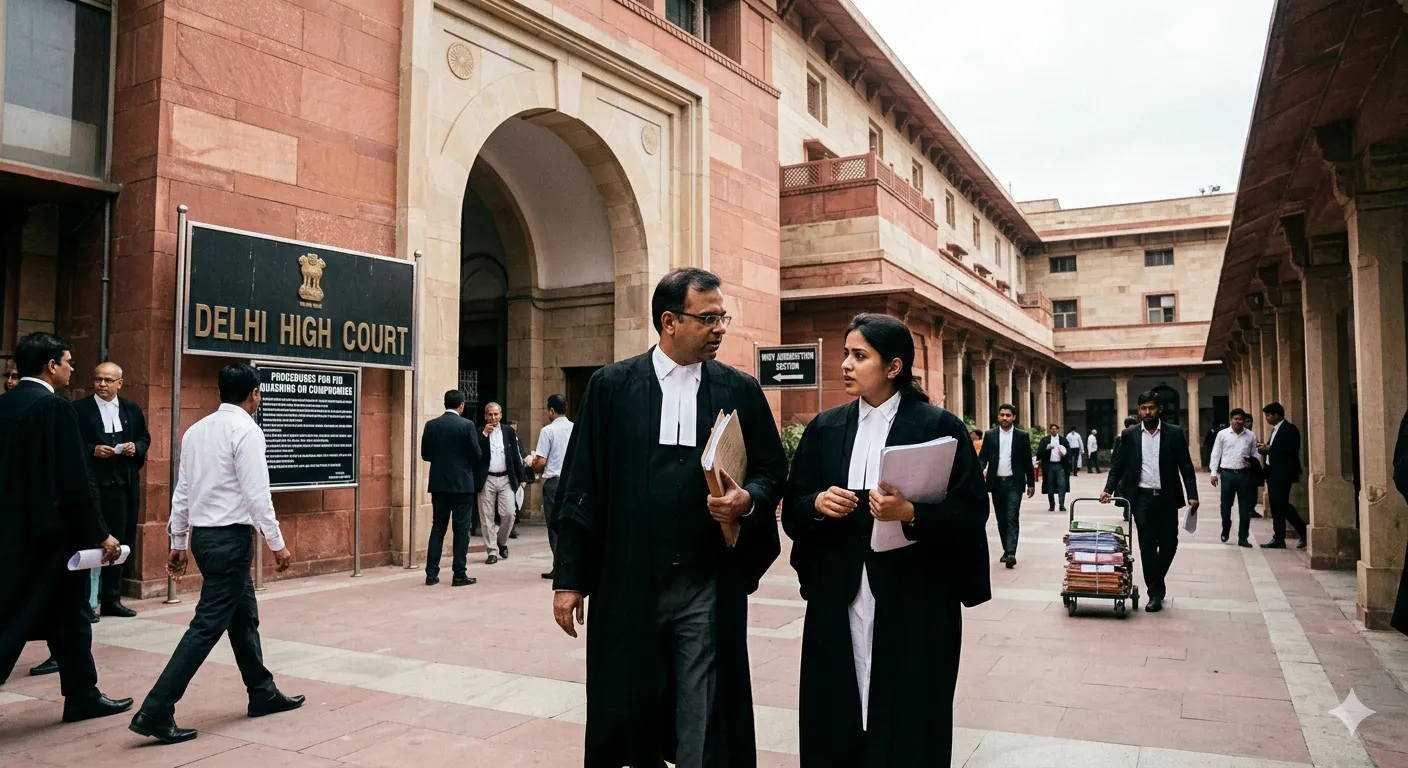
FIR Quashing on the Basis of Compromise in Delhi High Court
Complete Legal Guide (Procedure, Judgments, Documents & Time)
Introduction
Indian criminal justice system ka ek important objective sirf punishment dena nahi balki social harmony aur peace maintain karna bhi hai. Isi wajah se courts kai situations mein parties ko encourage karti hain ki agar dispute personal nature ka ho to use compromise ke through resolve kiya jaye.
Zyadatar matrimonial disputes, neighbour disputes, family disputes aur personal altercations mein courts ka approach yahi hota hai ki parties ek doosre ke saath prem aur sneh poorvak rahen aur unnecessary litigation ko khatam kiya jaye.
Lekin criminal law mein har case compromise se khatam nahi kiya ja sakta.
Kuch offences compoundable hote hain aur kuch non-compoundable.
Agar offence compoundable hai to trial court compromise accept karke case close kar sakti hai.
Lekin agar offence non-compoundable hai to trial court ke paas power nahi hoti.
Aise cases mein High Court ki inherent power ka use karke FIR quash karwai jati hai.
Legal Provision for FIR Quashing
Earlier criminal procedure mein FIR quashing ki power Section 482 CrPC mein di gayi thi.
Ab naye criminal law Bharatiya Nagarik Suraksha Sanhita (BNSS) mein ye power Section 528 BNSS mein di gayi hai.
High Court apni inherent jurisdiction ka use karke FIR ya criminal proceedings ko quash kar sakta hai jab:
- dispute personal nature ka ho
- compromise genuine ho
- criminal case continue karna abuse of process ho
Agar chargesheet file nahi hui hai to petition Article 226 Constitution read with Section 528 BNSS ke tahat bhi file ki ja sakti hai.
Important Supreme Court Judgments on FIR Quashing
Gian Singh vs State of Punjab (2012)
Is landmark judgement mein Supreme Court ne hold kiya ki High Court compromise ke base par non-compoundable offences ko bhi quash kar sakta hai agar dispute personal nature ka ho.
Court ne kaha:
High Court ko dekhna hoga ki offence society ke against hai ya purely personal dispute hai.
Agar dispute personal hai to compromise accept kiya ja sakta hai.
Narinder Singh vs State of Punjab (2014)
Is judgement mein Supreme Court ne FIR quashing ke liye detailed guidelines di.
High Court ko following factors consider karne chahiye:
- offence ka nature
- compromise voluntary hai ya nahi
- case ka impact society par kya hai
- parties ke beech dispute ka background kya hai
Agar dispute personal nature ka ho to quashing allow ki ja sakti hai.
Parbatbhai Aahir vs State of Gujarat (2017)
Is judgement mein Supreme Court ne clarify kiya ki High Court ki inherent power wide hai lekin unlimited nahi hai.
Court ne kaha compromise based quashing allow ho sakti hai:
- matrimonial disputes
- commercial disputes
- neighbour disputes
- partnership disputes
Magar serious offences affecting society mein quashing nahi honi chahiye.
Matrimonial Disputes and FIR Quashing
Delhi High Court mein sabse zyada FIR quashing petitions 498A matrimonial cases mein file hoti hain.
Aksar situation hoti hai:
- husband aur wife compromise kar lete hain
- settlement amount decide ho jata hai
- mutual consent divorce file ho jata hai
Aise cases mein High Court generally FIR quash kar deta hai.
Court ka approach hota hai ki jab parties apna dispute settle kar chuki hain to criminal proceedings continue karna unnecessary hai.
Neighbour Disputes
Neighbour disputes bhi FIR quashing petitions ka common category hai.
Example:
- gali mein jhagda
- parking dispute
- property boundary dispute
- minor assault
Aise cases mein FIR aksar gusse mein register ho jati hai aur baad mein compromise ho jata hai.
High Court generally amicable settlement ko respect karta hai.
Cases Where Quashing May Be Refused
Kuch offences mein compromise hone ke bawajood High Court FIR quash karne se mana kar sakta hai.
Example:
- rape cases
- serious sexual offences
- large scale cheating
- corruption cases
Supreme Court ne kaha hai ki serious crimes society ke khilaf hote hain, isliye compromise ka concept un par apply nahi hota.
Road Accident Cases
Road accident cases mein High Court ka approach thoda strict hota hai.
Agar accident mein death ho jaye (Section 304A IPC) to Delhi High Court aksar quashing refuse kar deta hai.
Reason:
Aise offences ka impact sirf parties par nahi balki public safety par hota hai.
Documents Required for FIR Quashing
FIR quashing petition file karne ke liye aam taur par ye documents required hote hain:
- FIR copy
- Chargesheet copy (agar file ho chuki ho)
- Compromise deed
- Identity proof of parties
- Affidavit of complainant
- Affidavit of accused
- Petition under Section 528 BNSS
- Memo of parties
- Index
- List of dates
- Court fees
Court complainant ki personal presence verify karta hai taaki confirm ho sake ki compromise voluntary aur genuine hai.
Procedure of FIR Quashing in Delhi High Court
Procedure generally is tarah hota hai:
1️⃣ compromise finalize hota hai
2️⃣ quashing petition draft hoti hai
3️⃣ High Court mein filing hoti hai
4️⃣ registry objections remove kiye jate hain
5️⃣ matter court mein list hota hai
6️⃣ complainant ka statement record hota hai
7️⃣ court FIR quash kar deta hai
Time Required
Compromise based FIR quashing petitions ka disposal usually fast hota hai.
Delhi High Court mein normally:
7 se 10 din ke andar matter dispose ho sakta hai.
Kabhi kabhi verification ya court schedule ki wajah se additional date bhi mil sakti hai.
Legal Fees
FIR quashing matter mein generally bahut zyada fees nahi lagti.
Ismein primarily shamil hota hai:
- drafting
- filing
- objections removal
- court appearance
Frequently Asked Questions (FAQ)
- Kya compromise hone par FIR automatically khatam ho jati hai?
- Nahi. Non-compoundable offences mein High Court se quashing karani padti hai.
- FIR quashing ke liye kaunsi court jana padta hai?
- Generally High Court.
- Kya chargesheet ke baad bhi FIR quash ho sakti hai?
- Haan.
- Kya complainant ka court mein present hona zaroori hai?
- Haan.
- Kya 498A FIR compromise par quash ho sakti hai?
- Haan.
- Kya police station mein compromise se FIR khatam ho sakti hai?
- Nahi.
- FIR quashing mein kitna time lagta hai?
- 7-10 din approx.
- Kya cheating case quash ho sakta hai?
- Facts par depend karta hai.
- Kya rape case quash ho sakta hai?
- Generally nahi.
- Kya mediation settlement quashing ka base ban sakta hai?
- Haan.
- Kya High Court compromise reject kar sakta hai?
- Haan.
- Kya accused ko personally court jana padta hai?
- Usually haan.
- Kya FIR quashing mein bail ki zarurat hoti hai?
- Case ki stage par depend karta hai.
- Kya neighbour dispute FIR quash ho sakti hai?
- Haan.
- Kya High Court complainant ka statement verify karta hai?
- Haan.
Delhi High Court FIR Quashing Petition Structure
Ek standard quashing petition mein generally ye structure hota hai:
1️⃣ Index
2️⃣ Urgent Application
3️⃣ List of Dates and Events
4️⃣ Memo of Parties
5️⃣ Main Petition under Section 528 BNSS
6️⃣ Affidavit
7️⃣ Compromise Deed
8️⃣ FIR Copy
9️⃣ Chargesheet Copy
🔟 Annexures
Contact for Legal Assistance
Advocate Javed Ahmad
Court Marriage & Criminal Matters Lawyer
Chamber No. D-522B, Fifth Floor
Karkardooma Courts, Delhi
📞 Mobile: 9289925377