Mutual Consent Divorce in India | Time Frame, Procedure, Settlement & Child Rights
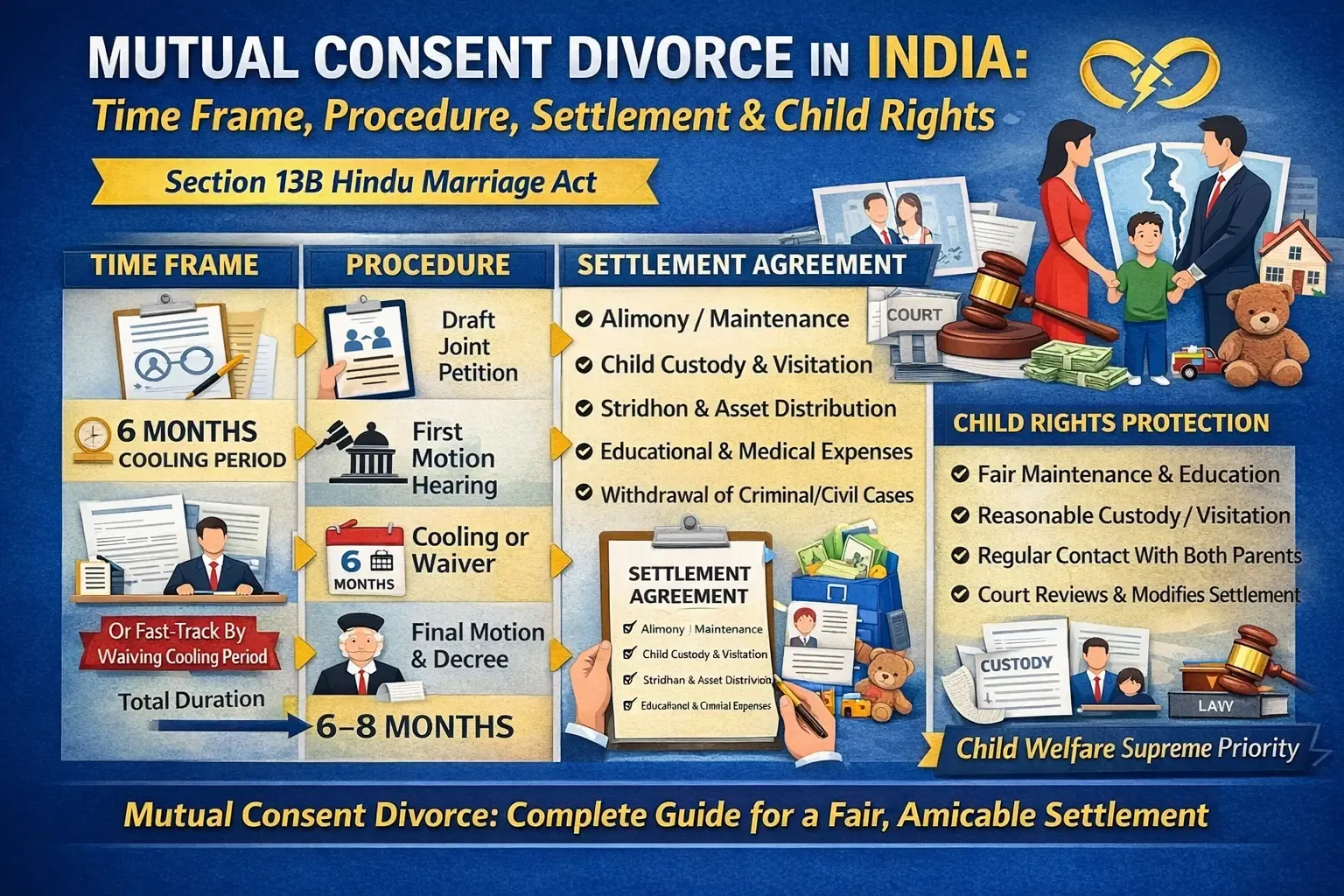
Mutual Consent Divorce in India – Time Frame, Procedure, Settlement & Child Protection
Mutual Consent Divorce is the most peaceful and dignified way for a husband and wife to dissolve their marriage when both agree that the marriage has irretrievably broken down. Indian family law provides a structured legal framework to ensure fairness, voluntary consent, and protection of vulnerable parties, especially children.
This post explains the complete process of mutual consent divorce, including timelines, settlement terms, and special safeguards for child welfare.
1. What is Mutual Consent Divorce?
Mutual Consent Divorce means:
- Both husband and wife jointly agree to dissolve their marriage
- Both parties mutually settle issues relating to:
- Alimony / maintenance
- Child custody and visitation
- Permanent settlement of claims
- Return of articles / stridhan
It is primarily governed by:
- Section 13B of Hindu Marriage Act, 1955
- Section 28 of Special Marriage Act, 1954
- Similar principles under personal laws
2. Eligibility Conditions
A couple can file for mutual consent divorce if:
- They have been living separately for at least one year
- They are unable to live together
- They have mutually agreed to dissolve marriage
Living separately does not always mean separate houses—it can include emotional and marital separation.
3. Mutual Consent Divorce Time Frame
Normal Time Frame
- First Motion Petition Filed
- Court records statements
- Cooling-off period of 6 months
- Second Motion Petition
- Final decree of divorce
➡ Total time: 6 to 8 months
Fast Track / Waiver of Cooling Period
Court may waive 6-month period if:
- All disputes are settled
- Parties are living separately for long time
- No chance of reconciliation
➡ Divorce may be granted within 1–2 months
4. Step-by-Step Procedure
Step 1: Drafting of Joint Petition
Petition includes:
- Marriage details
- Separation period
- Reasons for divorce
- Settlement terms
Step 2: First Motion Hearing
Both parties appear and give statements.
Step 3: Cooling Period / Waiver Application
Either wait 6 months or seek waiver.
Step 4: Second Motion Hearing
Final confirmation of consent.
Step 5: Divorce Decree
Court passes final judgment dissolving marriage.
5. Settlement in Mutual Consent Divorce
A written settlement agreement generally covers:
- One-time permanent alimony or monthly maintenance
- Custody of child
- Visitation rights
- Educational and medical expenses
- Return of stridhan and belongings
- Withdrawal/quashing of criminal or civil cases
Settlement becomes part of court record and is binding.
6. Child Custody & Welfare – Supreme Priority
Indian courts follow the principle:
👉 “Welfare of the child is paramount consideration.”
Even if parents agree on terms, court examines whether settlement protects child’s best interest.
7. Restrictions on Compromise to Protect Child Rights
Courts do not permit settlements that:
- Waive child’s right to maintenance permanently
- Deny education or medical support
- Give custody without ensuring safety and stability
- Prevent child from meeting the other parent unreasonably
Any clause harmful to child welfare can be rejected or modified by court, even if both parents agree.
8. Important Safeguards for Child Protection
Settlement should clearly mention:
- Monthly or yearly maintenance amount
- Responsibility for school fees, books, uniform, coaching
- Health insurance and medical expenses
- Visitation schedule
- Future increase clause based on inflation
These safeguards ensure child’s financial and emotional security.
9. Can Parents Privately Waive Child Maintenance?
❌ No.
Parents cannot legally sign away child’s statutory right to maintenance.
Child’s right is independent and continues till majority (and sometimes beyond).
10. Can Settlement be Modified Later?
Yes.
If circumstances change (income, child’s needs, education cost, health), court can modify:
- Maintenance
- Custody
- Visitation
11. Benefits of Mutual Consent Divorce
- Faster resolution
- Less emotional trauma
- Lower legal expenses
- Privacy maintained
- Amicable future relationship
Conclusion
Mutual Consent Divorce is a civilized and legally structured method of separation. However, settlement must be carefully drafted, and child rights can never be compromised. Courts act as guardians to ensure that every settlement protects dignity, fairness, and welfare of all parties—especially minors.